Reconfiguration of the Building Materials Supply Chain in the Era of Decarbonization
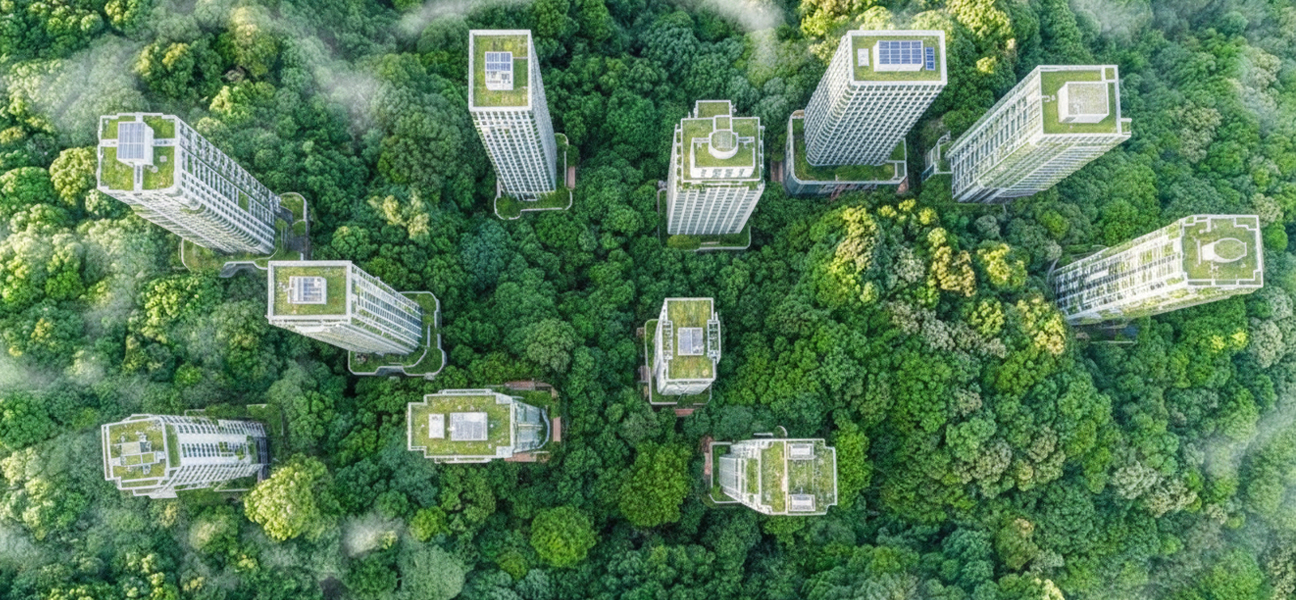
The construction industry today stands at a historic crossroads. Over 37% of global carbon emissions come from this industry, with two key materials—cement and steel—shouldering more than half of this burden. In the post-2021 world, when the slogan of Net Zero transitioned from a mere slogan to an agenda for policymaking, investment, and even project financing, the status of raw materials has changed. The selection criteria are no longer solely based on "price"; now, "carbon footprint" and "life cycle" are equally important for investors, contractors, and even financing institutions.
Green Concrete: A Technological Platform for an Ancient Industry
-
The Structural Challenge of Cement
Cement is the beating heart of the construction industry but is also one of the largest sources of global carbon emissions. The primary reason is the "calcination" process in clinker production, a chemical reaction that inherently releases carbon dioxide. As a result, reducing the carbon footprint of cement cannot simply be achieved through energy optimization or increased efficiency, but requires a transformation in materials and technology. The European Union, through its Carbon Border Adjustment Mechanism (CBAM), effectively regulates trade borders based on carbon emissions. In practice, exporting high-carbon cement to Europe will either become prohibitively expensive or impossible.
-
Paths to Transformation
-
Clinker Substitutes (SCM): The use of fly ash, slag, or natural pozzolana reduces the proportion of clinker in cement composition. These substitutes not only reduce carbon footprint but, in many cases, also improve the mechanical strength of concrete.
-
Carbon Capture & Utilization (CCU): This technology returns the released CO2 to the production cycle, either by injecting it into the concrete hardening process (which also increases its strength) or by stable storage. Companies like CarbonCure and Solidia have demonstrated that this idea is no longer just a laboratory concept but has scalability potential.
-
Bio-Cement: One of the most exciting innovations is the use of bacteria that activate upon contact with moisture and are capable of healing micro-cracks. This innovation increases the lifespan of structures and reduces maintenance costs, thus lowering the carbon effect and improving project economics.
-
-
Global Examples
-
Paris 2024 Olympics: The world's largest sporting event became a laboratory for sustainable materials. Over 30% of the concrete used was made from recycled materials, sending both an environmental message and presenting a picture of "material diplomacy" at a global level.
-
Changi Airport, Singapore: Self-healing concrete was tested in infrastructure at one of Asia's busiest air hubs. The significance of this project lies in demonstrating the economic aspect of green concrete: reduced maintenance costs as the primary market adoption driver.
-
-
Macro Implications
Green concrete is no longer an "alternative option" but is becoming the default choice in developed markets. Specifically, development banks and project financing institutions in Europe and Asia have made the use of low-carbon materials a prerequisite for financing. This means that the rules of the game have changed: access to capital will become more difficult without green concrete.
Recycled Steel: The Future of Metal in the Low-Carbon Supply Chain
-
The Circular Advantage
Steel is one of the few materials that can be recycled indefinitely without degrading in quality or strength. This unique property makes steel a cornerstone of the Circular Economy. In contrast to cement, which is inherently carbon-intensive, steel has the potential to be reproduced repeatedly with a minimal carbon footprint.
-
Emerging Technologies
-
Electric Arc Furnaces (EAF): These furnaces run on electricity (and in the future, renewable electricity) and emit significantly less carbon than blast furnaces, which are coal-based.
-
Green Hydrogen Steel: European projects like HYBRIT (Sweden) and Salzgitter (Germany) have demonstrated that green hydrogen can be used as a reducing agent in steel production instead of carbon. This shift could transform one of the most carbon-intensive industries in the world into an almost zero-carbon industry, provided it can be scaled.
-
-
Global Examples
-
Australia (2025): A $750 million green steel plant is set to be launched with an 80% reduction in emissions, showing that even mining-dependent economies are shifting course.
-
Europe: Automakers like Volkswagen and BMW have signed long-term contracts for green steel to ensure their supply chains. This move sends a clear message: the final consumer market is ready to pay a premium for low-carbon steel.
-
-
Market and Demand
According to the Green Steel Tracker, the demand for green steel will triple by 2030. The key takeaway is that major buyers are willing to pay 10–20% above regular prices because ESG (Environmental, Social, and Governance) requirements and investor pressures are driving them in this direction.
Why These Changes Are Not Just Technological
-
The Political Economy of Materials: New laws, such as carbon taxes and green subsidies, are reshaping the global competitive landscape. Countries and companies that adapt more quickly to these changes will be the winners in the future.
-
Geography of the Supply Chain: Early access to low-carbon technologies means export superiority. The future of the building materials market will no longer be solely dependent on natural resources but will rely on "technological resources."
-
Value Transfer: Profitability in the building materials industry is shifting from mass production to "sustainable technology, knowledge, and branding." Future value lies in "low-carbon knowledge," not just in production volume.
Iran's Position and Outlook in This Transition
Iran is one of the major producers of cement and steel in the region, but its current cost advantage cannot be sustained without technological transformation. International pressures, trade restrictions, and changing market tastes are forcing Iran to enter this path.
-
Opportunities:
-
Developing steel recycling and materials industries as a new domestic market.
-
Entering into technological collaborations with Asian and European companies to localize green technologies.
-
Establishing specialized research and development centers for low-carbon cement and steel.
-
-
Risks:
-
Losing export markets due to non-compliance with new carbon standards.
-
Reduced attractiveness for international finance, especially in large-scale infrastructure projects.
-
Conclusion
Green concrete and recycled steel are not just new products; they symbolize the beginning of a fundamental reshaping of the global building materials supply chain. In this transformation, the winner will be the one who adapts to the new rules first. For Iran, this is not just an environmental concern; it is a strategic economic and even geopolitical choice.